
A moment with Jason Te Mete
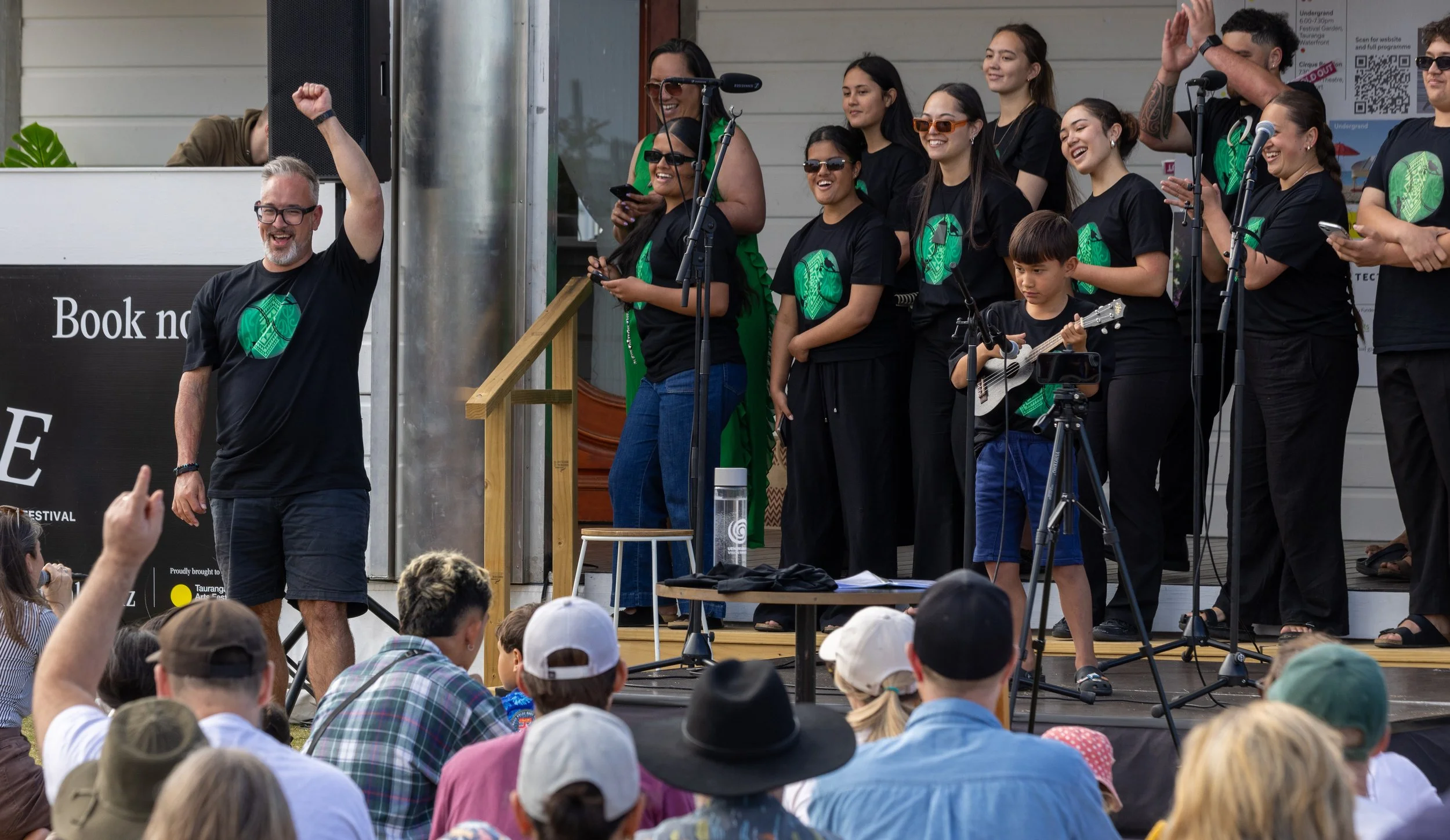
Jason and the Tuatara Collective lead Waiata Mai at the 2025 Tauranga Arts Festival (Photo credit Katie Cox Photography)
In celebration of Te Wiki o Te Reo Māori we caught up with Tauranga artist, Jason Te Mete.
How do you describe yourself professionally? I am a multidisciplinary artist with over 25 years experience in the professional arts industry. I am the founder of Tuatara Collective, a charitable arts organisation that offers performance and wānanga opportunities for Māori, Pasifika and LGBTQiA2+ voices to share stories authentically.
How did your journey, to where you are today, start? And how has it progressed? I am a trained classical pianist and pursued music initially, before getting lured into the theatre and onto the stage. I consider myself extremely lucky to have had such a vibrant and exciting career, acting, singing, dancing and playing the piano. I’ve directed over 40 musical productions, I’ve written a few plays, a bunch of songs, and I love devising and creating new work. I also enjoy teaching and sharing my knowledge with others whenever I can.
Who do you whakapapa to and where did you grow up? Born and raised in Tauranga Moana, I am a proud descendant of Ngāti Ranginui (Ngāti Hangarau and Pirirākau), and Ngai te Rangi, and also acknowledge ancestral bloodlines to France, Scotland, England and Denmark.
Why is the Waiata Mai such a beautiful thing do you think? There is something incredibly simple and powerful about people singing together - Waiata Mai is rongoā. Our art is rongoā. There is something healing about putting your voice alongside other people’s voices, it gets us out of our own heads and reminds us that we are part of something bigger. Waiata Mai provides an intergenerational space connecting kaumātua with tamariki and all others in between singing the same waiata together. That’s really powerful to me because our culture isn’t something that belongs to one generation. It’s something we inherit, nurture and pass on. Waiata Mai also provides an intercontinental space, giving the audience permission to use te reo Māori without feeling like they have to get everything perfect. We provide the words, we sing together, and we learn by doing. It’s inclusive, joyful and very human. That’s really at the heart of what we do at Tuatara Collective. Through our Rātā Initiative, we weave mental health and wellbeing support into our creative practice. We believe that when people feel safe, connected and supported, the art becomes stronger too. People come together and waiata mai, and they leave feeling a little better than when they arrived. That’s rongoā.
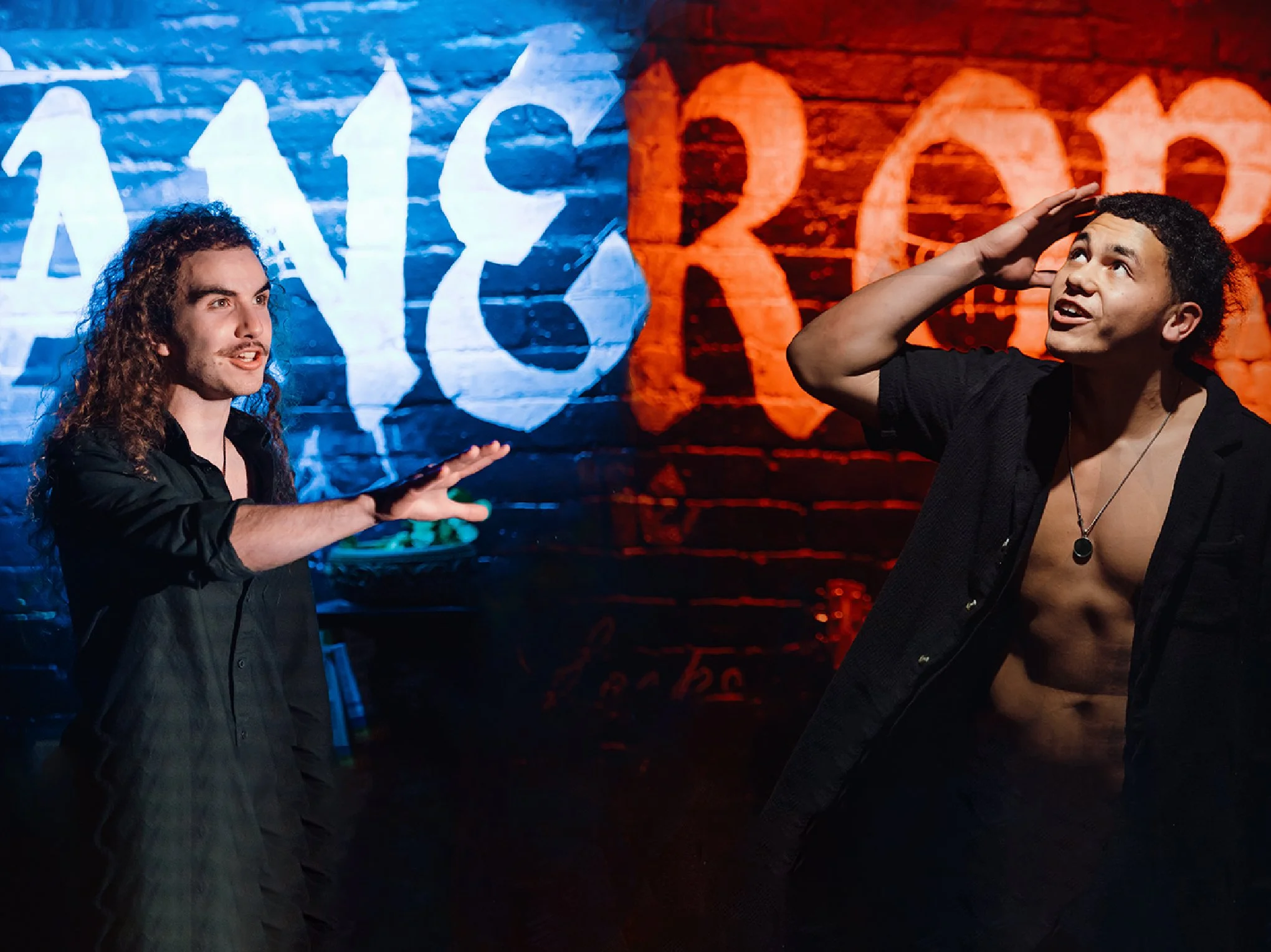
How did Tāne Rore come about? Tāne Rore came out of a desire to explore Māori men and Māori masculinity through the lens of the Māori deity of performing arts. It is also the brother-show to Hine-Te-Rēhia, which was about the feminine atua of performance and the experiences of Māori women. I was interested in creating a companion work that could ask: what does it mean to be Māori and male today? But I didn’t want to make a show about Māori men from some outside perspective. I wanted the performers to share their own stories, their humour, their vulnerability and their contradictions into the room - and by doing so, challenge the tropes and stereotypes of what a Māori man is supposed to be. The intergenerational aspect emerged as a really powerful part of the work. Having actors across a vast age range created an incredible passing of knowledge between generations and became about more than masculinity - it became about legacy, what we inherit, what we carry, what we challenge, and what we leave behind. That’s also where the rongoā comes in for me. Storytelling can be medicine. Seeing your own experiences reflected back to you can be incredibly affirming, and seeing someone from another generation standing beside you can remind you that you’re part of a much bigger story.
How would you describe this show? I would describe Tāne Rore as a celebration of Māori men in all our complexity. It’s bilingual, it’s funny, it’s physical, it’s insightful, and it’s deeply personal. There is haka, waiata, dance, poetry and monologue, but at the heart of it are real people telling real stories. It’s not trying to give you one definition of Māori masculinity. Quite the opposite. Māori men can be strong and vulnerable. We can be fathers, brothers, lovers, sons, leaders, comedians, artists. We can be masculine, feminine, queer, straight, confident, confused, grieving, joyful. I think the show is ultimately about connection; connection to each other, connection to the men who came before us, and connection to the young men who will come after us.
What do people seem to love about it? I think people love that it feels real, seeing Māori men represented in a way that is much broader than the stereotypes we’re used to seeing. They are loving. They are complicated. They have relationships, fears, humour and dreams. Ultimately, I think people love the feeling they leave with. They will have laughed, maybe they’ve cried, maybe they’ve recognised a bit of themselves or someone they love. There’s that rongoā again. If theatre can make you feel more connected to yourself, to your whānau, to your culture or to another human being, then it’s doing something worthwhile.
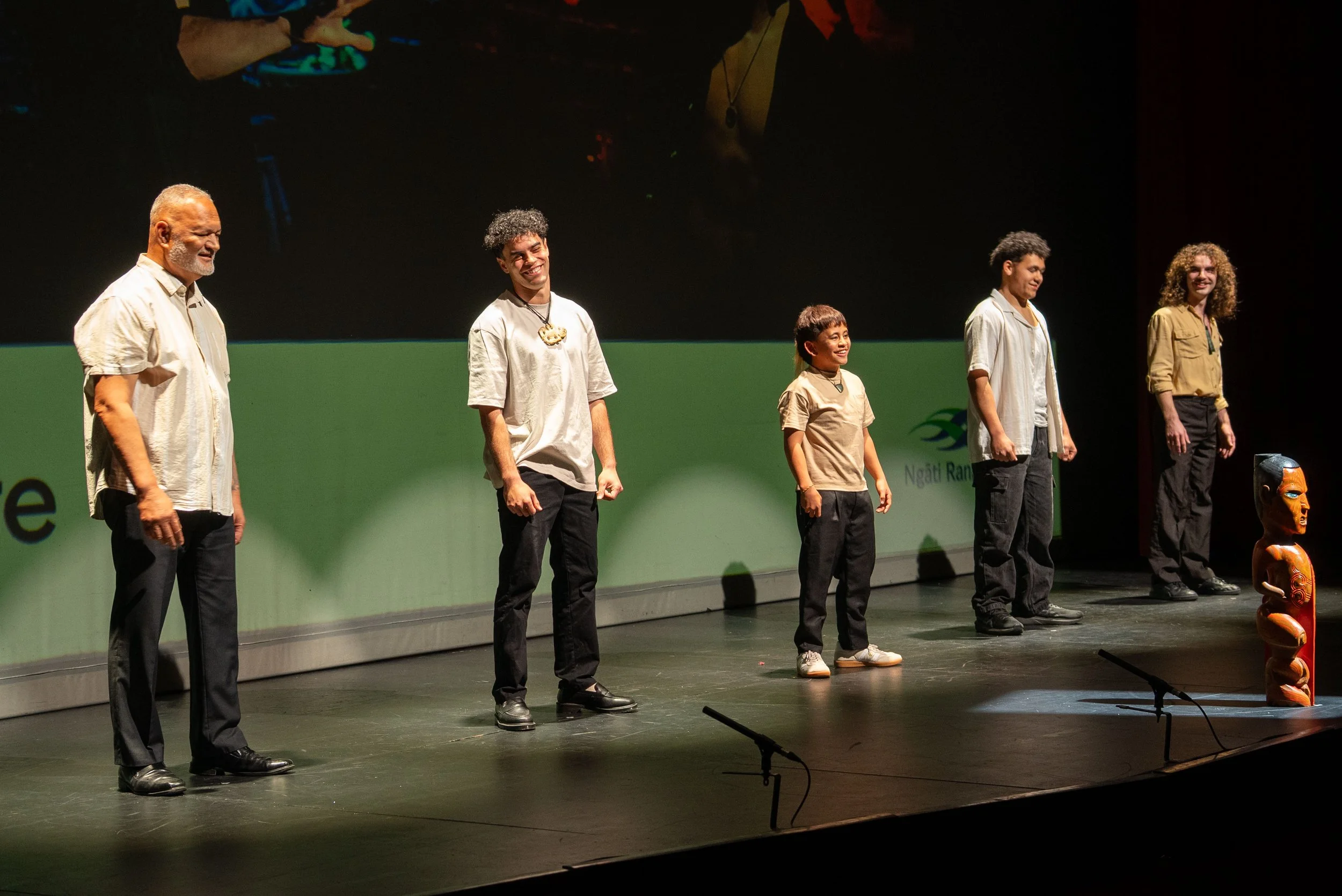
Tāne Rore actors at the Festival Launch for the Tauranga Arts Festival L to R: Joseph Rehu-Hahunga, Poroaki Merritt-McDonald, Nātana Mika, Tohu Edwards and Luke Orbell. (Photo Credit James Wharton)
Tell me about the performers in Tāne Rore - who would you like a shout out to?
POROAKI MERRITT- MCDONALD is a Tauranga Moana-born and bred Māori actor and artist whose career continues to grow across stage and screen in Aotearoa and internationally. With whakapapa to Ngāti Ranginui, Ngāiterangi, Ngāti Pūkenga, Ngāti Kauwhata, Rangitāne, Ngā Rauru, Tūhoe and Ngāti Rehua, Poroaki was raised through kōhanga reo, kura kaupapa Māori and wharekura, grounding his creative practice strongly in te ao Māori.
Recent years have seen Poroaki build an impressive body of screen work, with credits including Muru, Savage, The Gone, Shortland Street, Kairākau and Encanto Reo Māori. In 2026, his screen career has continued with roles in Big Girls Don’t Cry, Baddies, Monarch: Legacy of Monsters and Sgt. Haane.
NĀTANA MIKA is a 12-year old Māori actor from Tauranga, with whakapapa to Ngāi Tūhoe and Ngāti Ranginui, who is already building a pretty remarkable body of work for his age. His screen credits include Wrecking Crew, Rapido and the feature film Ka Whawhai Tonu, in which he played Puku, the chief’s cheeky grandson.
In the original production of TĀNE RORE in 2025, reviewer Aroha Awarau singled him out for his ability, at just 11, to hold his own alongside the much older cast and described him as “a star in the making.”
TOHU EDWARDS is a proud descendant of Ngāpuhi, Whakatōhea and Ngāti Porou and is a talented young Tauranga Moana actor who is quickly building an impressive reputation across theatre and screen.
At just 17 years old, Tohu has already appeared on screen in the television series Not Even, taken on the role of Sonny in In the Heights, and performed with Tuatara Collective in FOR THE FALLEN and the original season of TĀNE RORE.
JOSEPH REHU-HAHUNGA is a Tauranga-based Māori actor, with whakapapa to Ngāti Rangiwewehi and Ngāti Ranginui. What makes Joseph particularly interesting within the TĀNE RORE cast is the depth of experience he brings: his professional training stretches back to the early 2000s at UNITEC, followed by a substantial return to acting and ongoing screen and stage training in recent years.
His earlier theatre credits include Coming Home, directed by Raymond Hawthorne, and Whakairo. More recently, Joseph has thrown himself back into performance. He has played the title role in Macbeth, Tom in Skin Tight, and appeared in the short film Kidnapped. His recent screen work also includes the short film Bound, in which he played Enzo.
LUKE ORBELL is an emerging Māori actor, writer, director and creative practitioner of Ngāi Tahu/Kāi Tahu descent. He graduated from Unitec’s Acting programme in 2023 and has been deliberately building a practice that goes beyond acting, with experience in writing, directing and producing, and a particular interest in telling stories reflecting his queer and Indigenous identities.
Luke's journey is interesting because his creative work and advocacy have long gone hand-in-hand. Back in 2022, as Head Boy of Manurewa High School, he represented Debbie Ngarewa-Packer at New Zealand Youth Parliament, where he spoke about colonisation and reconnection with his Kāi Tahu whakapapa.
What's next for you, Jason? Other than TAF? We have exciting other projects, including a rangatahi wānanga programme scheduled throughout November in collaboration with Tautoko Mai and ZONTA, a funny-as Christmas-themed kid’s show touring around schools in December, our incredible ANZAC Tribute show FOR THE FALLEN, our stupidly fun festival show BATTLE CHORUS will continue to pop up around the place (including Nelson Arts Festival in Oct), and our new, super fabulous show ESCAPING is ready to take on tour in 2027!